No Results Found
The page you requested could not be found. Try refining your search, or use the navigation above to locate the post.


“Therefore, preparing your minds for action, and being sober-minded, set your hope fully on the grace that will be brought to you at the revelation of Jesus Christ.”
– 1 Peter 1:13
Main Thought: Two things are evident in this particular verse written by the apostle Peter. First of all, the apostle makes it evident that our walk with the Lord happens intentionally and that we are to “prepare [our] minds for action.” Secondly, he commands that these believers “set [their] hope fully on the grace that will be brought to [them] at the revelation of Jesus Christ.” Many believers miss the commands of the apostles–Paul, Peter, and John–that we have a responsibility to set our hearts and minds on the kingdom of God and the return of Christ. Advancing in spiritual growth is not accidental, and neither is “your hope fully on the grace…at the revelation of Jesus Christ,” which doesn’t mean we are just supposed to look up at the skies all the time and dream of heaven. No, Peter was telling the believers of that day to be prepared for action, to be busy about doing the kingdom work of Christ. When Jesus had ascended into heaven and the believers were standing gazing up, the two angels said why are you doing this, that He is going to return in the same way you have seen Him ascend (Acts 1:10-11). They immediately went back to Jerusalem and began to meet together to pray, to prepare themselves for the coming of the Holy Spirit and for the kingdom work that Christ had called them to. When the Holy Spirit came on the day of Pentecost to fill them and equip them, they were already prepared and had their hope fully set on Christ. Do we desire the coming of Christ and our glorification? Absolutely, but we are not called to just sit around waiting for it, we are to prepare ourselves, we equip ourselves daily with the Word of God and prayer, we meet with the people of God in worship and the instruction of God’s Word, so that our hope is more fully set on the kingdom of Christ and the grace revealed at the coming of Christ and we are in our hearts and minds more fully prepared for doing the kingdom work He has called us to do. This is not just for the pastors, elders, and teachers, but every child of God is called to this. Is your mind prepared for action and your hope fully on the grace that will be completed at the revelation of Christ? We do so daily and intentionally by filling our minds with God’s Word, and we equip ourselves for the spiritual work of the believer by going to His throne, drawing near to Him in prayer. May every one of us who know Christ be obedient to what Peter is admonishing us to do, and may we more and more have our “hope fully on the grace that will be brought to [us] at the revelation of Jesus Christ.”
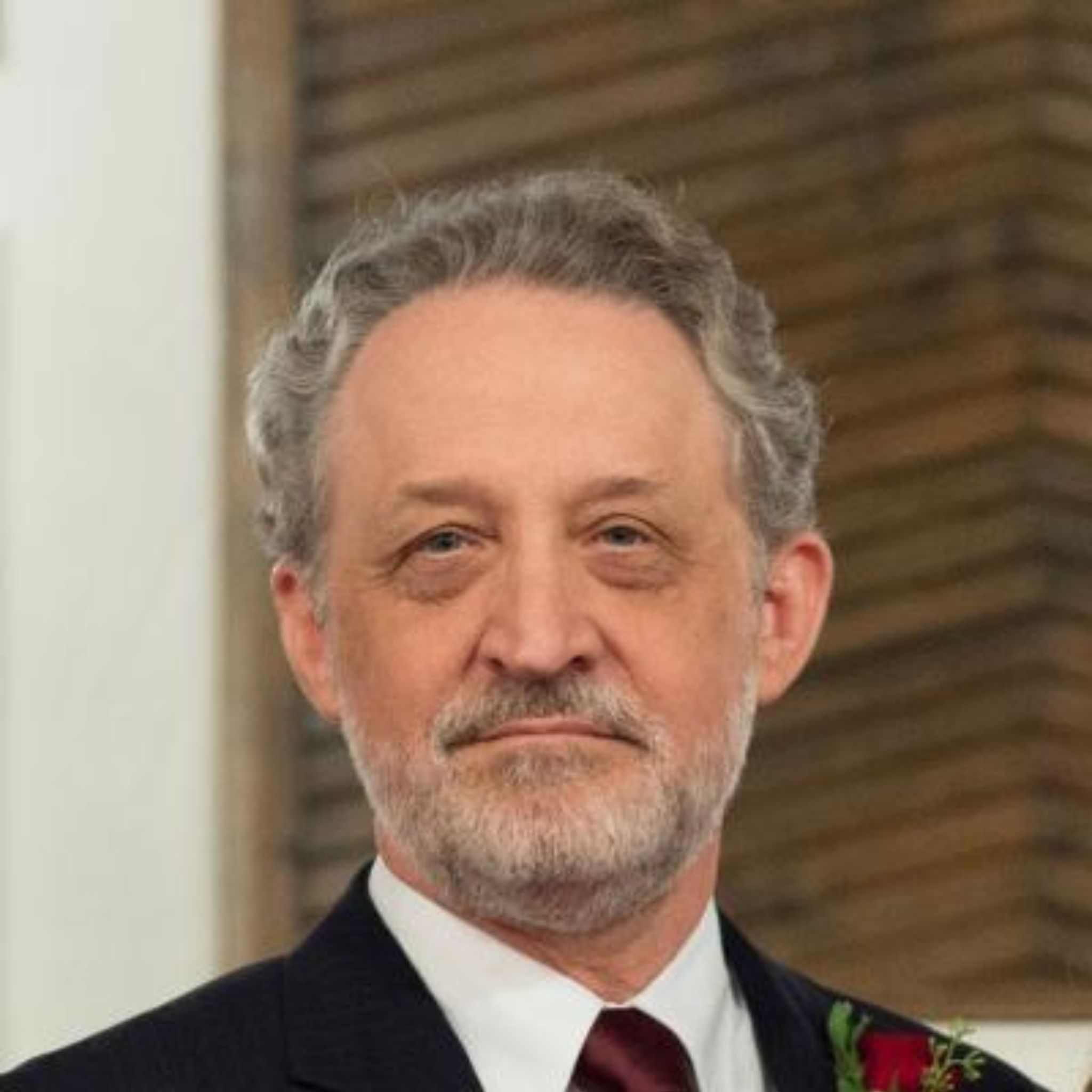
David Webber is married to Mary with four children and four grandchildren, and serves as the Pastor of Faith Baptist Church in Longview, TX. He obtained a BS in History from the University of Texas at Tyler, TX, and pursued studies at Baptist Missionary Association Theological Seminary in Jacksonville, TX. Throughout his ministry, he has been an invited preacher and educator in numerous churches and various Bible conferences. Surrendering to the gospel ministry’s calling in 1972 at the age of 16, he received preaching licensure from Little Flock Baptist Church in Longview, Texas, in 1974. Graduating with a Bachelor of Science Degree in History from the University of Texas at Tyler in 1978, he was ordained in December of 1980 by Faith Baptist Church. Following this, he contributed his services to Faith Baptist in Longview and subsequently engaged with Grace Baptist Church in Tyler, Texas, where he instructed Sunday School and delivered sermons as needed. In February of 1994, Faith Baptist invited him to lead as their pastor, a role he has faithfully held to the present day. David writes a blog for the church website and is a writer for The Art of Worship.

The page you requested could not be found. Try refining your search, or use the navigation above to locate the post.
“For you know the grace of our Lord Jesus Christ, that though he was rich, yet for your sake he became poor, so that you by his poverty might become rich.”
– 2 Corinthians 8:9
Main Thought: The apostle Paul in the first part of this chapter speaks of the richness and sacrificial giving which the Macedonian churches had done, even in the midst of affliction and poverty, giving generously for the needs of others and other churches. Paul says this was an act of grace (2 Cor. 8:1) and urges the Corinthian church to excel in this grace also. To magnify this giving, and the excelling nature of it, Paul reminds the Corinthian believers of the grace of our Lord Jesus Christ in coming to this earth. None of us can imagine what Christ left when he departed from heaven, but Paul uses the word rich here, which in the original language means abounding with wealth. He is not speaking of material wealth as we would imagine, but he is speaking of the glories, the splendors, and the exaltation that surrounded Christ in heaven because he was the eternal Son of God. It was a place without sin, without pain, a place of eternal holiness, love, and communion with God the Father, but he left there and humbled Himself and as is said here, He became poor. The word poor does not really convey what is meant here; in the original Greek, it means that Christ became like a beggar, like an indigent person on the street, begging for bread. Remember that when a scribe told him “I will follow you wherever you go” Jesus’ reply was “Foxes have holes, and birds of the air have nests, but the Son of Man has nowhere to lay his head” (Matt. 8:19-20), revealing the poverty of Christ’s earthly life. Yes, Paul reminds the Corinthians that their earthly poverty was nothing compared to the poverty of our Lord, who gave up the riches of heaven for the poverty of earth, giving up the privileges and glory of heaven. Why did Jesus do this? “So that you by his poverty might become rich” (2 Cor. 8:9). Here is the answer; here is the reason, so that we who were destitute, in the poverty and the slavery of sin with no hope of inheritance, might become the sons of God and inherit the riches of salvation and heaven. Paul said in Ephesians 1:7 that “In him we have redemption through his blood, the forgiveness of our trespasses, according to the riches of His grace.” Those riches belong to us now, we possess them in this present day and we know that because of the promises of His Word, we can know that the riches of heaven are ours also because we have been sealed as a guarantee by the Holy Spirit (Eph. 1:13-14), the Spirit who indwells every believer (Rom. 8:16). Because Christ became poor for us, we are rich as the children of God because of His grace, beyond anything we can imagine or dream of; one day we will abide in the richness of the new heavens and new earth that have been promised to all who ever believe on Him by faith. May each of us who know Christ thank him for the riches we have because of the poverty He took upon Himself, the eternal and spotless Son of God.
David Webber is married to Mary with four children and four grandchildren, and serves as the Pastor of Faith Baptist Church in Longview, TX. He obtained a BS in History from the University of Texas at Tyler, TX, and pursued studies at Baptist Missionary Association Theological Seminary in Jacksonville, TX. Throughout his ministry, he has been an invited preacher and educator in numerous churches and various Bible conferences. Surrendering to the gospel ministry’s calling in 1972 at the age of 16, he received preaching licensure from Little Flock Baptist Church in Longview, Texas, in 1974. Graduating with a Bachelor of Science Degree in History from the University of Texas at Tyler in 1978, he was ordained in December of 1980 by Faith Baptist Church. Following this, he contributed his services to Faith Baptist in Longview and subsequently engaged with Grace Baptist Church in Tyler, Texas, where he instructed Sunday School and delivered sermons as needed. In February of 1994, Faith Baptist invited him to lead as their pastor, a role he has faithfully held to the present day. David writes a blog for the church website and is a writer for The Art of Worship.
The page you requested could not be found. Try refining your search, or use the navigation above to locate the post.
“Man who is born of a woman is few of days and full of trouble. He comes out like a flower and withers; he flees like a shadow and continues not.”
– Job 14:1-2
Main Thought: When we read these words of Job, we are reminded that our physical lives are very brief. Even if we live to 80, 90, or 100 years old, it is a very brief time in respect to history, and especially in regards to eternity. It begs the question, especially as Christians, of what we are spending our time and energies on. When I was a young man, I thought I had all the time in the world to increase in my knowledge of God and to grow in my faith. But now, I look back and see that the time passed very quickly and there is still so much of God’s Word that I do not deeply know, and I am still dissatisfied with the progress of my spiritual growth. Job’s words confirm to me that I should count each day as a gift from God and that the focus of my life should not be on that which is temporal, but that which is eternal. Whatever age we are as Christians, the call of Christ is for us to “Seek first the kingdom of God and His righteousness” (Matt. 6:33). We cannot know if we will have tomorrow, but the call for us today and all the days He is pleased to give us is to live our lives for the glory of God. Adam and Eve were created by God and put into the Garden of Eden for a plan and a purpose, not just to sit around and admire the creation. We too as Christians have been saved, not just to sit around and dream about heaven, but we have been saved with a mandate to glorify God by preaching the Gospel, grow in the grace and knowledge of the Lord Jesus Christ, grow in holiness and sanctification, serve and bless others, and carry out the call of the Church, which is to go into the world and make disciples of all nations. May every believer and every Church strive to be a lighthouse on a hill, magnifying Christ until we go to be with Him or until He comes again. Remember that this is our calling, and may God give us strength and endurance to fulfill this calling.
David Webber is married to Mary with four children and four grandchildren, and serves as the Pastor of Faith Baptist Church in Longview, TX. He obtained a BS in History from the University of Texas at Tyler, TX, and pursued studies at Baptist Missionary Association Theological Seminary in Jacksonville, TX. Throughout his ministry, he has been an invited preacher and educator in numerous churches and various Bible conferences. Surrendering to the gospel ministry’s calling in 1972 at the age of 16, he received preaching licensure from Little Flock Baptist Church in Longview, Texas, in 1974. Graduating with a Bachelor of Science Degree in History from the University of Texas at Tyler in 1978, he was ordained in December of 1980 by Faith Baptist Church. Following this, he contributed his services to Faith Baptist in Longview and subsequently engaged with Grace Baptist Church in Tyler, Texas, where he instructed Sunday School and delivered sermons as needed. In February of 1994, Faith Baptist invited him to lead as their pastor, a role he has faithfully held to the present day. David writes a blog for the church website and is a writer for The Art of Worship.
The page you requested could not be found. Try refining your search, or use the navigation above to locate the post.
“And because of him you are in Christ Jesus, who became to us wisdom from God, righteousness and sanctification and redemption, so that, as it is written, ‘Let the one who boasts, boast in the Lord.'”
– 1 Corinthians 1:30-31
Main Thought: We all know that it is wrong to boast or brag about ourselves. Proverbs 27:2 tells us “Let another praise you, and not your own mouth…” So when it comes to ourselves and boasting of our own accomplishments or knowledge, it is wrong. However, in this passage of Scripture we are told boasting is appropriate, because in this case, our boasting is in what Christ has done for us and what we are now in Him. The history of the church at Corinth at this point was one of division, pride, and arrogance. Some had picked sides in regards to preachers (1 Cor. 1:12), others were taking pride in certain spiritual gifts (1 Cor. 12 & 1 Cor. 14), and some flaunted their wealth at the Lord’s Supper (1 Cor. 11:17-21). In these verses, Paul reminded them, and us, that all that we possess as Christians is in Christ, and there is no place or room for boastfulness or pride. Because of Christ, we now have true wisdom, not the wisdom of the world that is only temporal, but the wisdom of the Gospel that leads to eternal life and the wisdom of His Word that helps us to grow in Christ and walk righteously in this world. Paul also reminded them that in Christ they are righteous because the righteousness of Christ has been put on our account, meaning we are now declared eternally righteous in the eyes of God (Rom. 4:23-5:3). Also, because of Christ we now possess a position of sanctification, or holiness, where God does not see us in our sinfulness, but because of Christ we are seen as eternally holy. And last, because of Christ we now possess redemption, which means we have been bought by Christ out of our slavery to sin and the punishment of our sin; we have been delivered by Christ’s blood from that. This is why if we do any boasting, or any bragging, as Christians it should always be in our Lord, because all that we possess is because of what He has done for us. After all, He became the substitute for our sins. May our lives and our mouths boast to others of what we are and have because of Christ.
David Webber is married to Mary with four children and four grandchildren, and serves as the Pastor of Faith Baptist Church in Longview, TX. He obtained a BS in History from the University of Texas at Tyler, TX, and pursued studies at Baptist Missionary Association Theological Seminary in Jacksonville, TX. Throughout his ministry, he has been an invited preacher and educator in numerous churches and various Bible conferences. Surrendering to the gospel ministry’s calling in 1972 at the age of 16, he received preaching licensure from Little Flock Baptist Church in Longview, Texas, in 1974. Graduating with a Bachelor of Science Degree in History from the University of Texas at Tyler in 1978, he was ordained in December of 1980 by Faith Baptist Church. Following this, he contributed his services to Faith Baptist in Longview and subsequently engaged with Grace Baptist Church in Tyler, Texas, where he instructed Sunday School and delivered sermons as needed. In February of 1994, Faith Baptist invited him to lead as their pastor, a role he has faithfully held to the present day. David writes a blog for the church website and is a writer for The Art of Worship.
The page you requested could not be found. Try refining your search, or use the navigation above to locate the post.
“Whoever conceals his transgressions will not prosper, but he who confesses and forsakes them will have mercy.”
– Proverbs 28:13
Main thought: We often mistakenly think that worship is a Sunday thing that we do and that no preparation prior to Sunday is necessary. But the reality is that throughout the week prior to corporate worship on Sunday, there should be and must be preparation for worship. To think that we can go to worship the Lord on Sunday giving little thought to Him during the week is a great error. The first way that I think that we should prepare for worship is a daily confession of our sins. As Christians, we have been given a new nature, we are a new creature in Christ, and our desires now are focused on pleasing our Lord. But we are still affected by sin and we still sin, and this sin while not severing us from our salvation in Christ (Philippians 1:6), can and does affect our fellowship with Christ. An example of this is seen in the life of David, who committed adultery with Bathsheba and his unconfessed sin definitely brought the displeasure of God and broken fellowship, but when he confessed that sin fellowship was restored (Psalm 51). Also, we see how Peter denied our Lord three times on the night of Jesus being falsely accused and taken away, but obviously, we see from the accounts in Acts that Peter was restored to fellowship with our Lord and was greatly used by God. We deceive ourselves if we think that we do not sin (1 John 1:8), and we also deceive ourselves if we think that the little sins that we commit and leave unconfessed do not affect our fellowship with God and our ability to worship Him with the people of God on Sunday. Our sins need to be confessed, for as Solomon writes here that if we conceal our sins, we will not prosper. I believe the application is that we will not prosper in any way, especially spiritually, if we fail to confess and forsake sin. We are assured here that if we do confess and forsake, God in His mercy will forgive us and cleanse us so that we might daily have right fellowship with Him, and when we do so, we will be truly prepared to worship the Father in spirit and truth (John 4:23), when we come together with the people of God to worship Him.
David Webber is married to Mary with four children and four grandchildren, and serves as the Pastor of Faith Baptist Church in Longview, TX. He obtained a BS in History from the University of Texas at Tyler, TX, and pursued studies at Baptist Missionary Association Theological Seminary in Jacksonville, TX. Throughout his ministry, he has been an invited preacher and educator in numerous churches and various Bible conferences. Surrendering to the gospel ministry’s calling in 1972 at the age of 16, he received preaching licensure from Little Flock Baptist Church in Longview, Texas, in 1974. Graduating with a Bachelor of Science Degree in History from the University of Texas at Tyler in 1978, he was ordained in December of 1980 by Faith Baptist Church. Following this, he contributed his services to Faith Baptist in Longview and subsequently engaged with Grace Baptist Church in Tyler, Texas, where he instructed Sunday School and delivered sermons as needed. In February of 1994, Faith Baptist invited him to lead as their pastor, a role he has faithfully held to the present day. David writes a blog for the church website and is a writer for The Art of Worship.
The page you requested could not be found. Try refining your search, or use the navigation above to locate the post.